
Common Parent Questions About Childhood Myopia
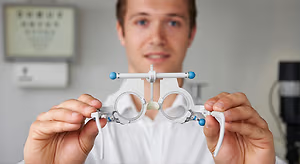
Your child moves closer to the television. Their teacher mentions that they squint at the board. Or their glasses prescription changes again, even though they wear them every day.
Recognizing vision changes and arranging a pediatric eye exam at Complete Eyecare can help you understand whether your child needs vision correction, myopia management, or both.
Subtle Signs My Child Needs an Eye Exam
Squinting, moving closer to distant objects, and reporting blurry distance vision can suggest myopia. Children may also rub their eyes, blink frequently, tilt their head, or complain of headaches.
A child may assume everyone sees the classroom board or television the way they do. Instead of describing blur, they may change where they sit or avoid activities that have become difficult.
Notice the circumstances: Do headaches happen during homework? Are they struggling even with their glasses on? These details can help your eye doctor assess the concern.
Why Does My Child’s Prescription Keep Getting Stronger?
Myopia commonly increases because the eye grows longer from front to back. This measurement is called axial length. When the eye becomes too long for its focusing system, light lands in front of the retina, making distant objects blurry.
Progression is often faster during the primary school years, though the timing varies. It may continue through adolescence and sometimes into early adulthood.
Can It Progress Even When They Wear Their Glasses?
Yes. Standard single-vision glasses bring distant objects into focus, but generally do not slow the eye growth associated with myopia.
A stronger prescription does not necessarily mean your child has worn their glasses incorrectly. It is a reason to ask how their myopia is progressing and whether treatment could help slow it.
Could Blurry Vision Affect School or Sports?
Uncorrected distance blur can make it harder to read the board, follow a ball, or recognize someone across the playground. A child may become frustrated or less willing to participate when they cannot see an activity clearly.
Reading fatigue and homework avoidance deserve attention too, although they can involve other vision concerns or causes unrelated to eyesight. Myopia alone does not explain every difficulty with concentration, learning, behaviour, or confidence.
If you notice a change, ask your child what feels difficult and share those observations during their exam.
Are Screens Causing My Child’s Myopia?
Myopia has several contributing factors, including family history and visual environment. Long periods of close-up activity and limited outdoor time are associated with risk. Close-up work includes reading printed books as well as using tablets or computers.
Families can support healthier habits without treating every screen session as harmful.
What Can We Change at Home?
- Break up close work. Encourage regular pauses during homework, reading, and gaming.
- Check viewing distance. Help your child avoid holding books or devices very close to their face.
- Make room for outdoor daylight. Work towards about two hours outside each day when practical, with suitable sun protection.
Outdoor time has stronger evidence for helping delay myopia’s onset than for slowing established myopia. If your child is already nearsighted, ask about treatment alongside these habits.
Why Does Childhood Myopia Matter for Adult Vision?
Higher levels of myopia are associated with greater risks of retinal detachment, glaucoma, and myopic macular degeneration, which affects central vision.
These complications are not inevitable. However, a child who develops myopia early has more years in which it may progress.
Progressive myopia means nearsightedness is increasing. It does not automatically mean a child has pathological myopia, which involves structural damage within the eye.
Addressing progression during childhood aims to limit how much myopia develops while maintaining clear vision and monitoring eye health.
How Do Myopia Control Treatments Work?
Myopia management aims to slow progression, though it can’t guarantee that growth or prescription changes will stop completely.
Complete Eyecare offers several approaches:
- MiyoSmart glasses: Specialized spectacle lenses combine clear vision with optical zones designed for myopia control.
- MiSight daily contact lenses: These soft lenses correct vision and use treatment zones to help slow progression. Wear them during the day and discard them after use.
- Orthokeratology: Ortho-k lenses temporarily reshape the cornea overnight. They can correct vision during the day and help slow progression.
- Low-dose atropine: Prescription eye drops can help slow progression. They do not replace the glasses or contact lenses needed for clear vision.
Your eye doctor will explain suitability, expected benefits, care requirements, and possible risks. Follow-up visits help assess the response and guide any adjustments.
When to Ask About Myopia Management in Mississauga
Ask when your child is first diagnosed, when their prescription is increasing, or when you notice new difficulty seeing at a distance.
You don't need to wait several years of prescription changes to start the conversation. Bring previous prescriptions if available, along with questions about school, sports, screen habits, or treatment routines.
Book an eye exam at Complete Eyecare today.